Mike Candrea
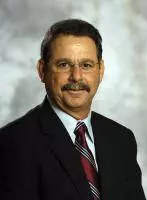
The date was June 7, 2006, less than 24 hours after
Retiring
Dr. Likins had every reason to make the robust assertion as Mike Candrea’s Wildcats won 20 of their last 22 games to clinch the NCAA title, and a seventh national championship in 16 years to go along with a number of feats that only cemented the claim.
As though conquering the collegiate world were not enough, Candrea spent the summer of 2006 leading Team
If Dr. Likins was looking for a debate, he would be hard-pressed to find any takers.
Besides the aforementioned credentials, who could argue with the fact that Candrea is the fastest softball coach in NCAA history to amass 1,000 victories?
In the last 19 years, Candrea has led
With the 2006 title, another
While endorsements from former players and forever members of the Wildcat family speak volumes, the results of Candrea’s instruction and leadership render no doubt to his abilities.
I
n terms of team accomplishments last year,
Candrea’s unequivocal message and desire is to maximize the ability and performance of each student-athlete on the team. What has resulted is team and individual success, both on and off the field.
Whether he is instructing one of his 33 All-Americans, who combined for 75 citations, his 18 players who went on to represent the United States of America, or a walk-on who is trying to have more productive at-bats, one thing is clear: Candrea is a teacher.
Although there are a myriad of tales and success stories, one recent episode became the stuff of legend in 2006.
Then-sophomore Callista Balko was batting a team-low .177 through UA’s first 26 games. Just 10 games prior, the
The answer was that Balko was
So on March 17, in
What resulted was a .319 batting average with 31 RBI over
Although Balko did not receive any postseason awards or honors, she did receive an invitation to represent her country in the World University Games. Certainly, to go from hitting below the
***
His message has reached many, and in addition to making The University of Arizona stand second-to-none in the collegiate softball world, his influence has gone far beyond that ?- and the critics have taken notice.
In 2004, Candrea’s efforts earned him the United States Olympic Committee’s most prestigious award: the Olympic Shield. With the citation, Candrea became the first coach in any sport so honored. In addition to the Olympic Shield, the USOC tabbed Candrea as its coach of the year.
Just last year, the nine-time Pac-10 Coach of the Year was named coach of the Women’s College World Series 25th Anniversary Team. In addition to the fact that he was the only coach cited, four of his former players made up 10 of the exclusive spots.
Candrea was honored in 1999 by The University of Arizona Alumni Association with an Honorary Alumnus Degree, a prestigious campus-wide honor bestowed annually by the association upon educators and faculty who help teach
He was inducted into the National Fastpitch Coaches Association Hall of Fame in 1996, and since then his teams have a record of 635-84.
On April 11, 2005, Candrea’s consistent success throughout the years earned him the distinction of being one of just five Division I softball coaches to win 1,000 games.
He has produced five National Player of the Year winners ?- pitcher Susie Parra (1994), infielder Jenny Dalton (1996), pitcher Nancy Evans (1998) and pitcher Jennie Finch (2001 and 2002). He has been named Pac-10 Coach of the Year nine times among 17 league, region or national coaching honors. Of his All-Americans, freshmen, sophomores and juniors earned 49 of those honors.
Candrea averages a 54-11 record, more than three All-Americans, at least five NCAA Tournament victories and almost three College World Series Victories every season.
Since 1988, UA has won fewer than five postseason games just once, and has eclipsed the 50-win mark 14 times. In the four years the Wildcats have failed to capture 50 victories, UA has still won at least 44 games. Additionally, the Wildcats have yet to lose 20 games in any of the 20 seasons under Candrea’s watch. The fact
As one would imagine, Candrea is never one to back down from a challenge. On a daily basis he challenges his players, and when it comes to drawing up the schedule of opponents his philosophy is no different. In 2006, for example, UA went 31-11 against teams ranked 18th or better at the time of the game, and had played over a dozen contests with future WCWS during the regular season. The year before, UA entered the postseason with a 30-12 record against teams competing in the NCAA Tournament.
***
His teams’ victory total of 67 in 1998, plus 66 wins in 1995, 65 victories in 2001, 64 victories in 1994 and 61 in 1997 are among the top 10 in the NCAA record books. Including a five-season stint as a junior college coach at
That proficiency started at
Those early years marked the upswing in Candrea’s recruiting skill at the Division I level and, by 1988, the team turned in a 54-18 record and made it to the College World Series for the first time and recorded two WCWS victories. That year, pitcher Teresa Cherry became Candrea’s first UA All-American.
The ensuing years provided more of the same ?- UA finished 48-19 in 1989 and 49-17 in 1990, placed third and second, respectively, in the tough Pac-10, but still came up short in WCWS play.
The bigger picture jelled in 1991 when things looked somewhat bleak as the Cats finished 11-9 and fourth in conference play ?- tied for his worst such record. Once in the postseason, a gutty and defensive-oriented UA swept
The program was off and running, and
***
Candrea knows you don’t win games without players. A succession of top-level players ?- sluggers, hitters, dominant pitchers, Olympians ?- has kept
In a time that academics all too often find themselves a distant second to athletics, Candrea has stressed hitting the books as well ?- with Autumn Champion (2006, second team), Leah O’Brien (first team in 1994, 1995 and 1997), Jenny Dalton (first team in 1996, second team in 1995) and Nancy Evans (1998) earning Academic All-America honors.
Candrea is sought out by softball and baseball coaches around the country and has delivered instructional clinics throughout the nation. He is particularly known for hitting techniques, team fielding drills and squad motivational preparation. In recent years, he has consulted with major league baseball stars and other learned technicians to conduct national hitting clinics. He also participates in dozens of such sessions to help improve the way softball is taught and played. He has written several books and produced a number of videotapes on various softball subjects, and has designed specific practice aids and equipment that are widely used at various levels of play.
Still, just watching him work with a hitter, some balls and a batting tee show the true value of his coaching: he loves to teach. He enjoys the work, is able to communicate and uses an encouraging but firm style. His pre-game infield drill is an example. It’s a smooth, fast-paced warm up that’s done exactly the same each time.
Candrea’s style of play, public comportment and consistent winning puts Wildcat fans in the stands at Rita Hillenbrand Memorial Stadium. Last year the Wildcats drew an average of 1,292 fans per game and had a season-high 2,388 spectators at Arizona’s super regional-clinching victory over LSU. Arizona is among national leaders in home attendance (and led by averaging 1,755 in 2002, 1,661 per game in 2001, 1,486 per game in 1995, 1,330 in 2000 and 1,316 per game in 1994). Most other years, Arizona checks in at No. 2 in per-game attendance.
***
Candrea began his softball coaching career at Central Arizona College from 1981-85. His team won consecutive NCAA World Series in his final two seasons, earning him national coach the year honors each time. Prior to coaching softball, he was an assistant baseball coach at Central from 1976-80.
A baseball player at Central, Candrea’s playing career was cut short by an elbow injury. He earned an associate’s degree at Central in 1975, a bachelor’s degree at Arizona State in 1978 and a master’s degree from ASU in 1980.
Candrea was married to the former Sue Ellen Hudson for 28 years until her tragic death in July 2004, just 10 days prior to the Olympic Games.
Candrea has two children ?- son Mikel, 27, and daughter Michelle, 24. Mikel, a 2004 Arizona graduate, had worked with the baseball team and strength and conditioning programs prior to his graduation. He is currently working as an assistant softball coach at Pacific. Michelle celebrated the birth of her son, Jaylen Mikel on Oct. 27, 2005. Jaylen is Candrea’s first grandchild.
Just before celebrating the New Year, Candrea opened a new chapter of his life. He wed the former Tina Tilton on Dec. 30 at The Westin La Paloma Resort and Spa in Tucson, Ariz.